Blog/3 min read
The Liking Gap: Why You Underestimate How Much People Like You
Research shows that after a conversation, most of us systematically underestimate how much the other person liked us. Here is why that happens, and what to do about it.
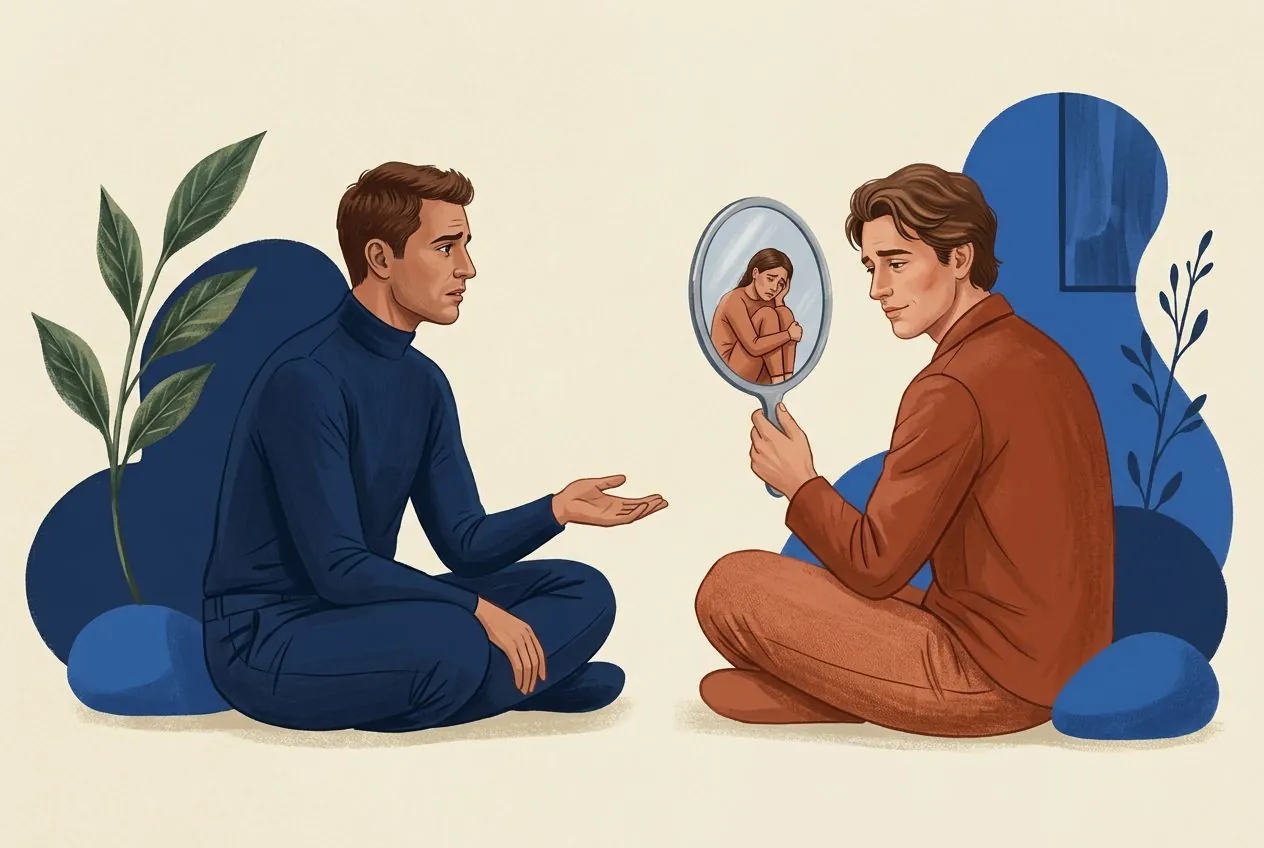
You leave a conversation and the review starts. You said something awkward. You laughed too loud. You forgot the name. You replay the moment where the other person looked at the door, and you decide: they were bored. They were being polite. They probably could not wait to leave.
That impression may be harsher than the other person's. Research suggests we often underestimate how much people like us after a conversation.
Researchers call this the liking gap.
What research says about the liking gap
In a study published in Psychological Science, Erica Boothby and colleagues had strangers talk to each other, then asked each person two questions: how much did you like your partner, and how much do you think your partner liked you?
People consistently and significantly underestimated how much they were liked. The effect was bigger for people who described themselves as shy. And it held up across short conversations, long conversations, college roommates over a full academic year, and workplace teams.
In these studies, people generally thought they were liked less than they actually were.
This has been replicated many times. It is one of the more robust findings in the recent psychology of everyday interaction.
Why you judge yourself more harshly after a conversation
During the conversation, you are inside your own head. You hear your own filler words. You notice your own pauses. You compare yourself to some imagined version of you who is smooth, funny, and never runs out of things to say.
The other person is not doing that. They are just having a conversation with you. Their standard of comparison is not your ideal self. It is "a stranger I did not expect to enjoy." And most of the time, that stranger turns out to be more interesting than they expected.
You notice your own awkward moments closely. The other person does not hear your internal commentary and may remember the conversation quite differently.
How the liking gap can make loneliness harder
When you have few conversations, each one can feel especially important. If you have been lonely for a while, a moment of hesitation may be enough to set you worrying about how it went.
Thinking an exchange went badly can make you less likely to start another. That leaves you with fewer chances to have a good experience or find out that someone enjoys talking to you.
Before deciding someone disliked you, consider what you actually observed. Your feeling afterwards is one part of the picture, not proof of what they thought.
When you think 'that was awkward, they probably thought I was weird,' remember that your assessment may underestimate their interest. You can notice the thought without letting it decide whether you speak to them again.
A simple exercise for worrying after a conversation
After your next conversation, before the rumination starts, write down one thing the other person did that suggested they were engaged. Something small is fine.
They asked a follow-up question. They made eye contact. They laughed. They stayed in the conversation when they could have left. They referenced something you said ten minutes later.
Write it down. One sentence. Then stop.
The purpose is to include signs of interest in your memory of the conversation, alongside anything that felt awkward. You are not required to decide it went perfectly. You are giving yourself a fuller account of what happened.
Starting another conversation while you still feel unsure
The liking gap is a common pattern in how people assess conversations. Knowing about it can help you pause before treating a negative impression as a fact.
You may still doubt yourself. When that happens, ask whether you have evidence that the person disliked you, or whether you are judging yourself more harshly than they did.
That can make it easier to try another conversation, even while you feel uncertain.
Further reading and practice
If doubt makes you hold back, read how one small conversation can help you get started. For the opening itself, see how to start a conversation with a stranger.
Want to explore where you tend to get stuck in conversations? Take the free social conversation test (3 minutes). For further practice in starting conversations, listening and sharing something about yourself, see the Talking with People course.