Blog/6 min read
Why Scripts and Conversation Models Work When You Start (and Why to Let Go Later)
In short: Why ready-made lines and conversation models help when you feel nervous, why they get in the way later, and how to switch to talking more freely: use form, then lose form.
Listen to this article
Read aloud in a natural voice
Anyone who has stood at an office coffee machine or a birthday party with a blank mind knows the urge for a script. A few lines you can rely on. A simple plan. Something that tells you what to say when it goes quiet.
Online you'll find plenty of them: conversation starters, the FORD method (Family, Occupation, Recreation, Dreams), question techniques, tricks for telling a story.
At the same time, people who find talking easy often say the opposite: "Just be yourself. Go with the flow. Don't use tricks."
Both are right. They're just talking about different stages.
In short
Scripts and conversation models help when you're starting out because nerves take up most of your attention. A simple structure, such as "say something about the situation, then ask one open question", gives you a way in and gets you moving. Later the same structure gets in the way: you end up thinking about the next step instead of listening, and you sound rehearsed. The principle is use form, then lose form. Use the model as scaffolding while you gain experience, then keep the idea behind it and let go of the exact words.
Why models work when you're just starting
When you feel nervous in a conversation, your head fills up fast. You're thinking about your posture, your voice, whether you'll say something silly and how the other person is looking at you, all at once. There isn't much room left for a quick, spontaneous reply.
At that stage a structure does three useful things.
1. It takes pressure off
A simple format means fewer choices. If you already know you'll mention something about the place and then ask one open question, you don't have to come up with something clever on the spot. You have one clear path instead of a hundred options.
2. It gets you moving
Hesitation grows the longer you stand there. A ready opener, or a fixed habit like greeting someone first and pausing before you continue, makes the first step smaller. You actually start the conversation instead of thinking about it. The article on conversation starters that work has examples you can use.
3. It helps you look back calmly
Without any frame, an awkward conversation quickly turns into "I'm just bad at this." With a model you can look at what happened: "I kept asking questions and didn't share anything about myself. That's why it felt like an interview." Now it's something you can practise, not a fixed part of who you are.
Where it goes wrong if you hold on too long
If a model helps this much, why would you ever drop it?
Because scaffolding isn't the building. Once your confidence grows, the model that protected you starts to slow you down.
You're in your head, not in the conversation
When you talk with a plan running in the background, you only half listen. While she tells you about her weekend, you're thinking: What was step three again? Should I ask an open question now? People notice that small delay. You're there, but your attention is on your own plan.
The other person doesn't follow your plan
Conversations aren't flowcharts. People make an unexpected joke, give a one-word answer or change the subject. If you're holding tight to a model, that throws you, because what's happening doesn't match what you prepared.
It sounds rehearsed
Most people can tell when a line has been practised. Even when your words are friendly, a conversation that follows a fixed pattern starts to feel like a survey or a sales call.
Use form, then lose form
Japanese martial arts have a name for this way of learning: Shu-Ha-Ri.
- Shu, follow the form: learn the rules and do the steps exactly.
- Ha, understand the principle: see why the rules work and start adapting them.
- Ri, let go of the form: stop thinking about the steps and respond to what's in front of you.
Social skills work the same way: use form, then lose form.
You start with clear scaffolding: a ready opener, a simple frame, a few questions for the coffee machine. There's nothing embarrassing about that. It's how people learn anything.
But the point isn't to recite it for the rest of your life. The point is to get used to the rhythm of a conversation. Once the worst nerves settle, you drop the exact words and keep the feel for it.
How to make the switch
If you notice you're leaning on formulas too much, you can let go in small steps:
- Swap lines for principles. Don't remember the exact sentence, remember what it's for. Not "What brings you here today?" but simply: be curious about what brought both of you here.
- Look outward. Stop checking how you sound and pay attention to the other person. How do they look? What do you hear in their voice? Once your attention is on them, you need a script a lot less. The article on observing better shows how to practise this.
- Let a second of quiet happen. Many people grab a prepared question because they're afraid of silence. Wait a moment after someone finishes. Often the most natural reply comes when you're not rushing for a line.
- Keep one model as a safety net. On a hard day, a tired evening or a new setting, it's fine to fall back on the structure. Letting go doesn't mean throwing it away.
Frequently asked questions
Is it fake to use prepared lines? No. Everyone prepares something sometimes, like a toast or a job interview. A prepared opener is just a way in. What matters is that you listen to the answer and respond to it.
How do I know I'm ready to let go of a model? When you notice you're thinking about the model during the conversation instead of the person. Or when you can do the steps without thinking about them. Then it's time to keep only the idea behind it.
Which model is good to start with? Keep it small. Greet, mention something about the situation, ask one open question and respond to the answer. The 30 conversation techniques give you more options once that feels easy.
What if I freeze without a script? That happens, especially at first. Go back to the model for a while and try again later. And if you keep replaying conversations afterwards, the article on how to stop overthinking conversations can help.
Start with something solid
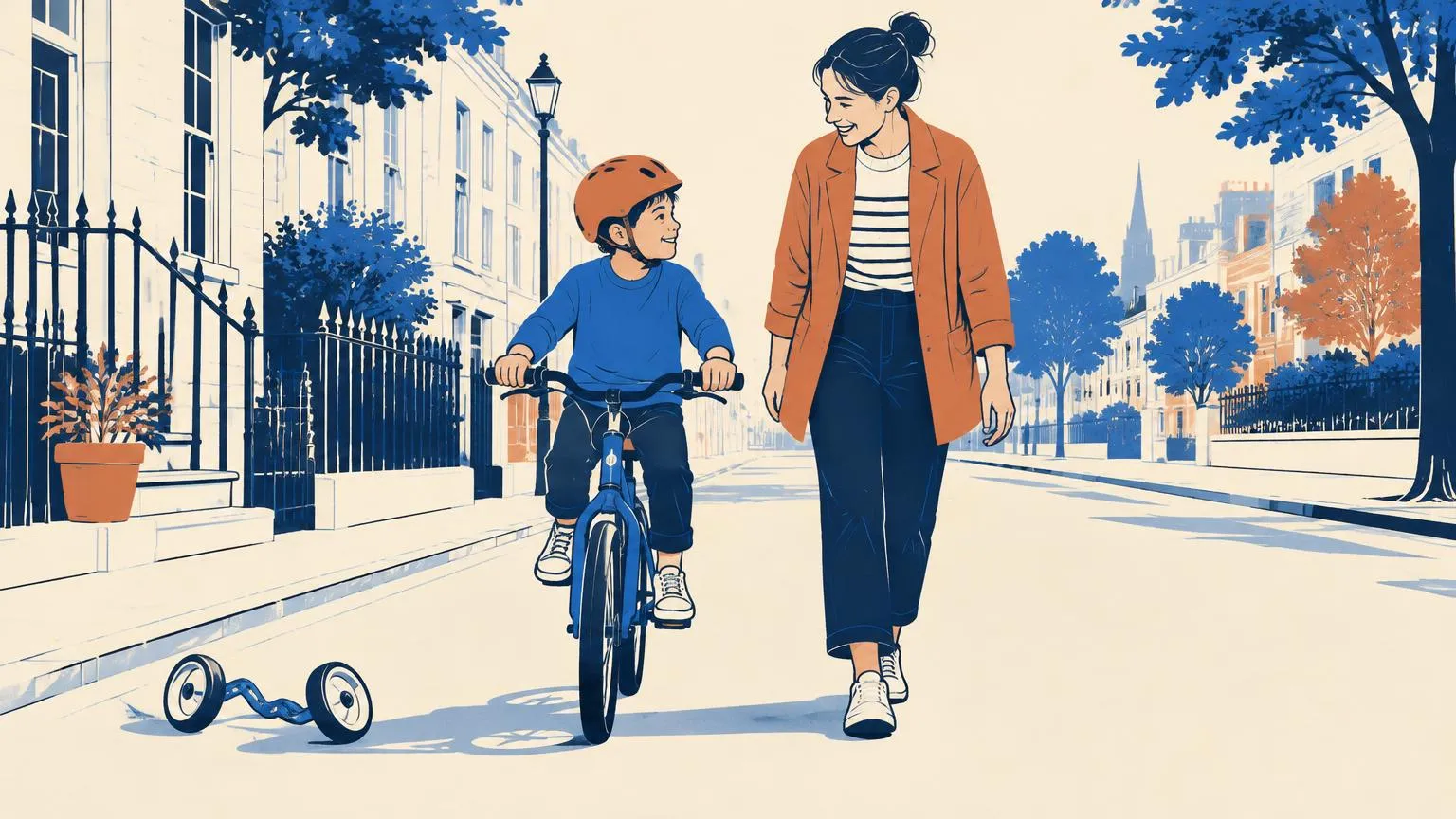
It's completely normal to want something to hold on to when talking to people feels tense. A model, a memory aid or a prepared question works like training wheels on a bike. It helps you get going.
Once you're moving, the training wheels come off. Not because they were wrong, but because you don't need them to stay upright anymore.
In the course Talking with People we start with simple, practical frames for everyday conversations, and then practise step by step until you need them less. The first module is free.